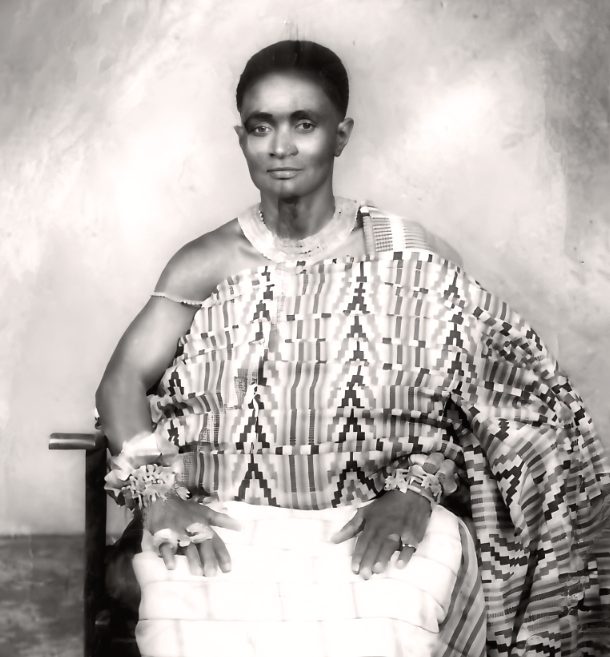
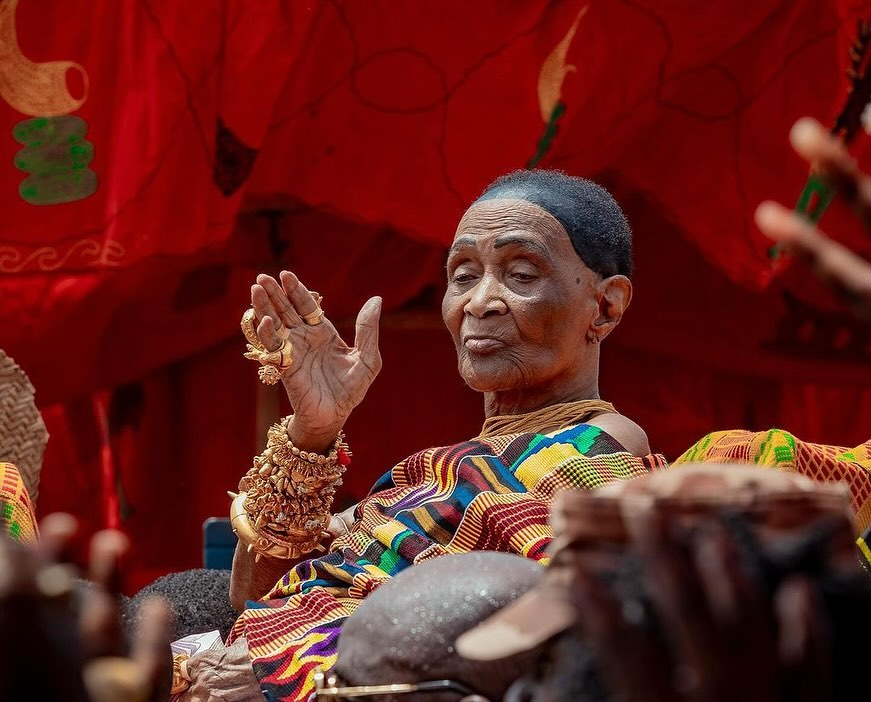
The passing of Nana Konadu Yiadom III closed a chapter in Asanteman that was at once sacred and quietly powerful. Born into the heart of the palace, she grew into the office of Asantehemaa with a deep sense of duty rather than display; her tenure was short by some standards but rich in cultural weight. Her life threaded palace ritual, quiet philanthropy, and the odd hint of prophecy; her burial brought the city to solemn stillness and reminded many why the Asantehemaa remains a central figure in Akan life. Below are twelve respectful, factual glimpses into her life and legacy.
1. She was born in a place tied to spiritual life and restoration.
Nana Konadu Yiadom III was born Nana Ama Konadu at the Benyaade shrine in Merdan, Kwadaso — a birth rooted in the spiritual geography of the Asante Confederacy’s restoration. Being born in that context meant her childhood was surrounded by rites, palace etiquette, and informal education inside the royal household rather than formal school — a form of training that would later shape her role as custodian of Asante custom and memory.
2. Her ascension followed a long maternal legacy.
When Nana Afia Kobi Serwaa Ampem II — her mother and a long-reigning Asantehemaa — passed, the transition placed Nana Konadu Yiadom III on a throne shaped by her mother’s 39-year stewardship. She was enstooled as the 14th Asantehemaa on 6 February 2017 and publicly outdoored soon after; her installation represented continuity in a lineage that binds Asanteman’s past to the present.
3. There were notes of prophecy around her enstoolment.
Accounts recorded in palace and cultural coverage recount a prophecy — delivered in the mid-1990s by a traditional priest Kwaku Firi Bosomfo and relayed by Baffour Akoto, a senior palace linguist of the Asantehene — that foretold her eventual elevation to the female stool. That prediction, believed and re-told by many in Asanteman, deepened the sense that her enstoolment was not merely dynastic but also spiritual, and it became part of how people remembered and interpreted her journey to the throne.
4. She served in a season of charity and quiet public works.
As Asantehemaa she was noted for philanthropic acts: donations to the Mother–Baby and paediatric units at Komfo Anokye Teaching Hospital and support for local health initiatives. Her stewardship included campaigns that encouraged breastfeeding and support for new mothers — gestures that translated palace authority into everyday, practical care for vulnerable members of the community.
5. Her style of leadership blended restraint and moral authority.
Observers described her as fair, humble and steady. Rather than performative leadership, she modelled a quieter authority: adjudicating disputes when called, maintaining palace protocols, and embodying the Asantehemaa’s moral role as a check and balance to public authority. Her approach reinforced the idea that the queen mother’s power is exercised as much through example as decree.
6. Her Burial Marked by Curfew

On September 18, 2025, her burial was accompanied by one of the most solemn measures and strict adherence to Asante tradition: a curfew in Kumasi. This act symbolized the extraordinary respect she commanded. The silence of the city contrasted with the rituals performed at Manhyia Palace, reflecting the weight of her departure. The curfew underscored her status as a spiritual and how the Asantehemaa’s passing is as much a civic event as a family one.
7. A Global Spotlight on Tradition
Her burial was not only a national moment but also a global one. Cultural scholars and observers highlighted the ceremonies as evidence of the enduring richness of African tradition. The rituals, cloths, and rites fascinated many around the world, demonstrating how Asanteman continues to uphold its identity while capturing international admiration. Her passing reminded people everywhere of the importance of cultural preservation.
For many outside Kumasi, the rites illuminated how ancestral memory and modern civic life are braided together in Ghana.
8. Inspiration to the Youth
She was particularly revered among young people. Unlike many royals who appear distant, she carried herself with humility and accessibility. She encouraged the youth to respect their heritage while pursuing modern opportunities. For many, she was a grandmotherly figure who offered guidance on blending cultural pride with personal ambition. In her, young Asantes saw a model of dignity and tradition grounded in relevance.
9. A Rare Record in Leadership

Her enstoolment created a historical record: it was the first time in over a century that the Asantehemaa and Asantehene were siblings. This remarkable arrangement strengthened the authority of the palace and symbolized unity at the highest level of leadership. It remains one of the unique aspects of her reign and an important footnote in the annals of Asante history.
10. Grandeur in Her Final Rites
The burial ceremonies at Manhyia Palace were filled with grandeur, befitting her stature. Chiefs, dignitaries, and citizens from all walks of life gathered to pay tribute. Traditional drumming, rituals, and symbolic cloths filled the palace grounds, turning her farewell into a cultural showcase. It was a powerful moment of unity, as people came together to celebrate her life and honor her memory.
11. A Life that Bridged Generations
Nana Konadu Yiadom III lived in an era of transition—from the post-independence years of Ghana to the digital age. Her reign bridged generations, reminding both the old and young that heritage is timeless. She upheld traditions while allowing space for modernity, making her relevant across multiple generations of Asantes.
12. A Lasting Legacy of Grace and Authority
Even in passing, she remains a symbol of resilience, authority, and grace. Her life is a testament to the power of women in leadership, the sanctity of tradition, and the strength of maternal guidance. For Asanteman, she will always be remembered not just as a queen mother but as a guiding spirit whose influence continues to echo.
Above titles and ceremony, Nana Konadu Yiadom III will be remembered for embodying the Asantehemaa’s principal duty: mothering a people. Her humility, her quiet public works, the spiritual overtones of her rise, and the communal grief at her burial together secured her place in collective memory as a steadying, maternal presence in Asanteman’s contemporary story.